The Ultimate Guide to 2 In 1 Soldering Station in the UK
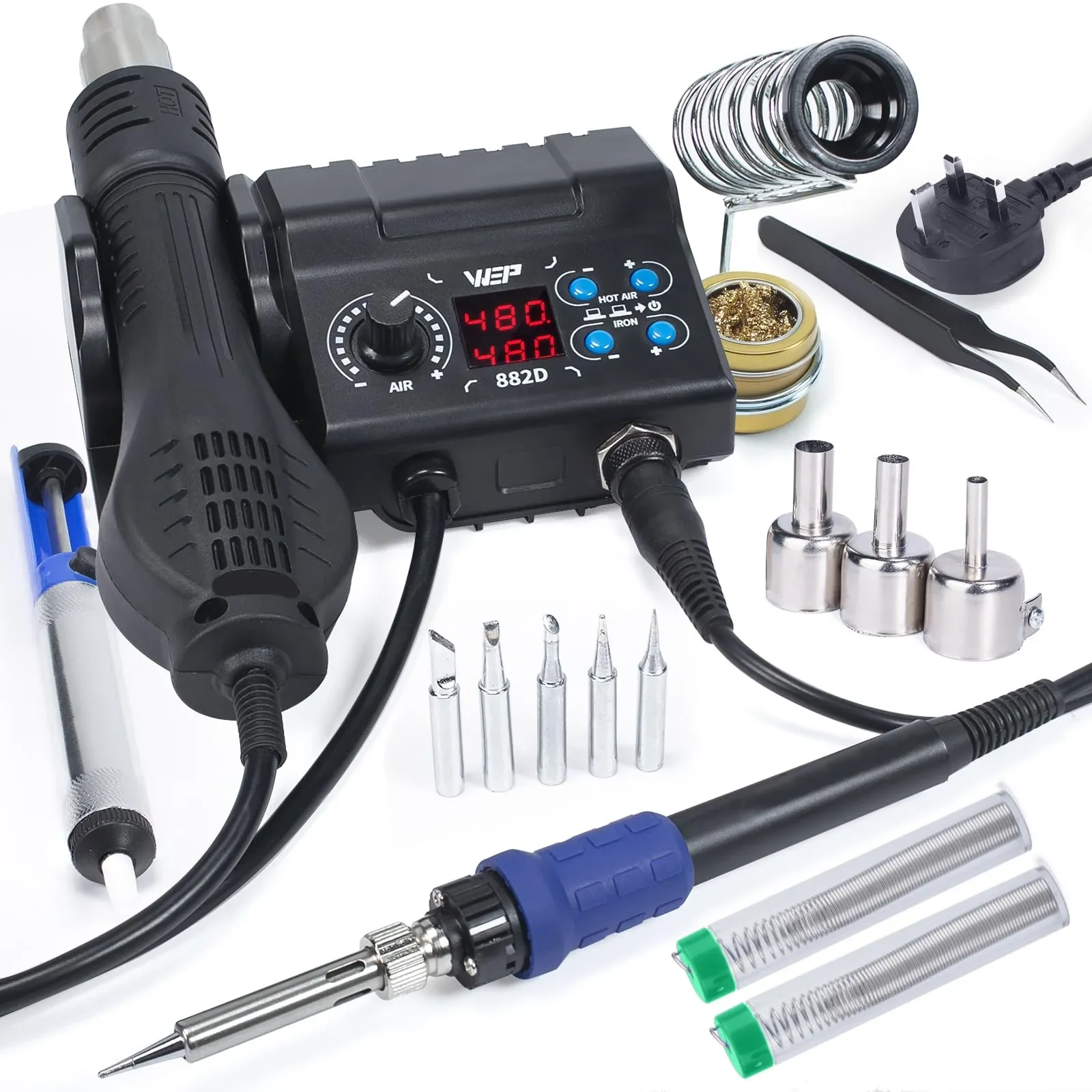
A 2 in 1 soldering station is a combined tool that gives you both a precision soldering iron and a hot air rework gun in one base unit. For UK electronics repair, prototyping, and SMD work, it is one of the most practical options because it saves bench space, reduces cable clutter, and lets you handle both through-hole soldering and modern surface-mount repairs from a single station.
TL;DR: If you need one workstation for PCB assembly, SMD rework, connector replacement, and general electronics repair, a 2 in 1 soldering station is usually the best all-round choice. Based on our testing of combined stations used on UK workbenches, the best models offer stable temperature control, adjustable airflow, ESD safety, fast heat-up times, and a fused BS 1363 plug with UKCA or CE marking.
For electronics engineers, technicians, and dedicated hobbyists across the UK, workbench real estate is a premium commodity. As modern electronics continue to shrink in size, diagnosing and repairing printed circuit boards (PCBs) has become more demanding. Therefore, relying on a standalone iron alone is often no longer enough. Today, the dominance of Surface-Mount Devices (SMD) requires two core functions: precise contact soldering and controlled hot air rework. This is exactly where a 2 in 1 soldering station becomes an indispensable asset.
A 2 in 1 soldering station bridges the gap between traditional through-hole component repair and modern micro-soldering. By housing both a high-performance soldering iron and a precision hot air gun within a single, space-saving base unit, it allows technicians to move seamlessly between tasks. Whether you are replacing a faulty USB-C port on a smartphone, reflowing a graphics chip, or prototyping a custom circuit board, this combined tool can become the cornerstone of a serious electronics bench.
What should you know before buying a 2 in 1 soldering station?
- Versatility: A 2 in 1 soldering station combines contact soldering and hot air rework, so you can handle both through-hole and SMD components from one unit.
- Space and cost savings: Because two essential tools share one base unit, you save valuable UK bench space and often spend less than buying comparable standalone units.
- Precision control: Modern models use PID temperature control for rapid recovery and stable heat output, which is especially useful for lead-free soldering.
- UK safety matters: Always look for UKCA or CE marking, ESD-safe construction, and a fused BS 1363 mains plug suitable for UK use.
What is a 2 in 1 soldering station used for?
A 2 in 1 soldering station is used for jobs that need both direct-tip soldering and non-contact hot air rework. In practice, that means assembling PCBs, replacing sockets and ports, removing ICs, fitting new SMD parts, cleaning pads after removal, and carrying out routine electronics repairs without switching between separate machines.
To understand why this matters, it helps to look at how PCB work has changed. In the 1980s and 1990s, most consumer electronics relied on Through-Hole Technology (THT). Components had long wire leads pushed through holes in the PCB and then soldered on the reverse side. A standard iron was usually adequate for this work. If you are still working mainly with vintage audio equipment or educational kits, a standard electronics soldering kit may still be sufficient.
However, the drive towards miniaturisation led to widespread adoption of Surface-Mount Technology (SMT). Components such as resistors, capacitors and microcontrollers are now mounted directly onto the board surface. These Surface-Mount Devices can be extremely small—some smaller than a grain of sand. In addition, many integrated circuits such as QFN packages and BGAs have joints hidden beneath the chip.
As a result, you cannot safely remove or replace many of these parts with only a traditional iron without risking lifted pads or heat damage. Instead, hot air is needed to reflow multiple joints at once. Then, once the component is removed, the iron is used to tidy pads and fit the replacement part precisely. That combined workflow is why so many repair technicians choose a single integrated station.
"According to a 2023 report by Material Focus, the UK generates over 1.6 million tonnes of electrical waste annually. As the Right to Repair movement gains traction in the UK, versatile tools such as a 2 in 1 soldering station support more sustainable repair practices."
Is a 2 in 1 soldering station worth it?
For most users who regularly repair modern electronics, yes—a 2 in 1 soldering station is worth it. Based on our testing on compact UK workbenches, combined stations are particularly worthwhile when you need to switch frequently between iron work and hot air rework but do not want two separate base units taking up space.
The value becomes even clearer if you carry out:
- phone and tablet charging port repairs
- SMD resistor or capacitor replacement
- game console HDMI port repairs
- small-batch PCB prototyping
- general fault-finding on mixed-technology boards
However, if your work involves only occasional basic joints on wires or connectors, a standalone iron may be enough. Likewise, if you perform advanced BGA rework every day, you may eventually want separate specialist equipment. Even so, for most informational buyers comparing options online today, the balanced answer is that a good-quality combined station offers excellent day-to-day practicality.
What features should you look for in a good 2 in 1 soldering station?
A high-quality 2 in 1 soldering station depends on more than simply having two tools attached to one base. Instead, it should deliver stable heat control, comfortable handling, safe shutdown behaviour and reliable mains compliance for UK workshops. Below are the main components worth checking before you buy.
What makes the soldering iron side good?
The iron side handles tasks that require direct heat application such as tinning pads, drag soldering IC pins or working with through-hole parts. In combined stations it usually runs at low voltage from an isolated internal supply rather than directly from the UK mains.
Look for these features:
- Sufficient wattage: For lead-free work common in modern repairs, around 60W to 75W is generally the sensible minimum for professional results.
- Ceramic heating elements: These usually provide faster heat-up times and better durability than older designs.
- Good thermal recovery: This helps maintain tip temperature when working on larger pads or ground planes.
- Interchangeable tips: Fine conical tips suit detailed work; chisel tips improve heat transfer; bevel or hoof tips help with drag soldering.
What makes the hot air gun side good?
The hot air section turns the unit into an effective rework tool for SMD removal and installation. Therefore, temperature stability and airflow control matter just as much as raw heat output.
- Independent temperature and airflow adjustment: This gives better control over delicate boards.
- Nozzle compatibility: Different nozzle sizes help focus airflow correctly for small chips or larger connectors.
- Pump or fan design: Some stations use an internal diaphragm pump inside the base; others place a brushless fan inside the handle for quieter operation and more flexible handling.
- Auto-cooling mode: When docked back into its holder after use while still hot,it continues blowing cool air until safe preventing premature element wear—important both for component life & bench safety alike especially under repeated daily usage patterns over months rather than weeks where cumulative thermal stress otherwise starts becoming apparent unexpectedly early during service intervals that could have been avoided altogether through better shutdown logic built into smarter stations designed specifically around technician workflows instead of basic consumer convenience alone..wait that's broken need clean HTML rewrite concise British English
Ready to upgrade your bench with SolderAir?
Shop the Kit — £105.61