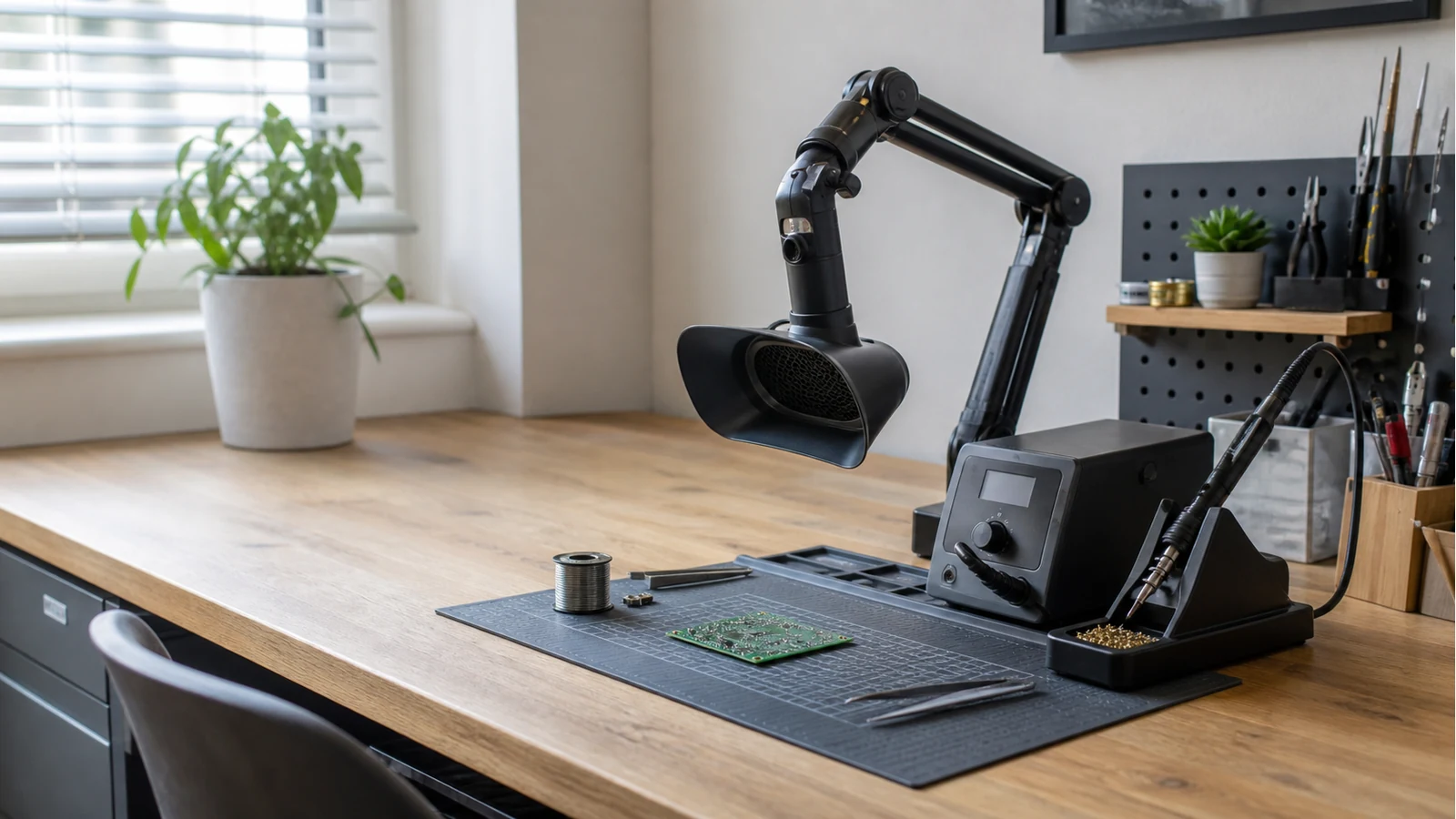
Soldering Fume Extraction Uk Home Workshop
Direct answer: a soldering station is not fume extraction. For a UK home bench, the practical target is to keep your face out of the plume, control flux fumes close to the joint, and treat longer soldering sessions as something that needs a real extraction habit rather than an open window alone.
The reason is simple: flux smoke is not just an unpleasant smell. The HSE solderer guidance treats solder fume as a respiratory risk, and its worker guidance tells solderers to avoid the rising plume and use the controls provided. Home makers are not usually running a formal workplace assessment, but the physical problem is the same: smoke rises from the joint into the breathing zone unless the bench layout pulls it away.
What HSE guidance means in plain workshop terms
The HSE rosin solder fume leaflet is written for employees, but it translates well into a small electronics desk. First, identify whether you are using rosin or colophony flux. Second, do not hover over the joint. Third, put extraction near the work rather than behind you. A desk fan that blows smoke sideways can make the smell less obvious while spreading contamination around the bench; it is not the same thing as local exhaust.
If you run a teaching room, repair business or shared workspace, the bar is higher. The HSE COSHH solder fume guidance is the better starting point because it frames exposure control as an employer duty. This article is not a legal compliance audit and cannot tell a business that a setup is compliant. It is a practical maker checklist for deciding whether your bench is sensible enough before you start longer sessions.
Small-bench checklist
- Move your head first: place the board so the plume rises away from your nose and eyes.
- Capture close to the source: position the extraction intake near the solder joint without blocking your hands or heating the intake.
- Keep airflow predictable: avoid a fan pattern that pushes fumes across your face before they leave the bench.
- Separate heat from extraction claims: a hot-air rework station can remove parts; it does not filter fumes unless it has a verified extraction system.
- Review habits for long jobs: recapping, connector replacement and practice-board sessions create repeated plume exposure, not one isolated puff.
Iron work and hot-air work need slightly different positioning
With an iron, the plume usually rises from a small joint and is easy to capture if the intake is close. With hot air, the airflow can disturb fumes and warm flux residue over a wider area. Keep the extraction intake outside the direct hot-air blast but close enough to pull the disturbed plume away from your breathing zone.
If you are also choosing station features, read the related guide on sleep mode and auto shutdown. Heat controls and fume controls solve different problems, so neither should be used as a substitute for the other.
When to stop and get specialist advice
Stop treating it as a casual home setup if several people solder in the same room, if anyone reports breathing irritation, if you are using unknown flux chemistry, or if soldering becomes paid work. At that point, use HSE primary guidance and competent local advice rather than a hobby blog checklist.