Smd Rework Station Explained: A UK Buyer's Guide
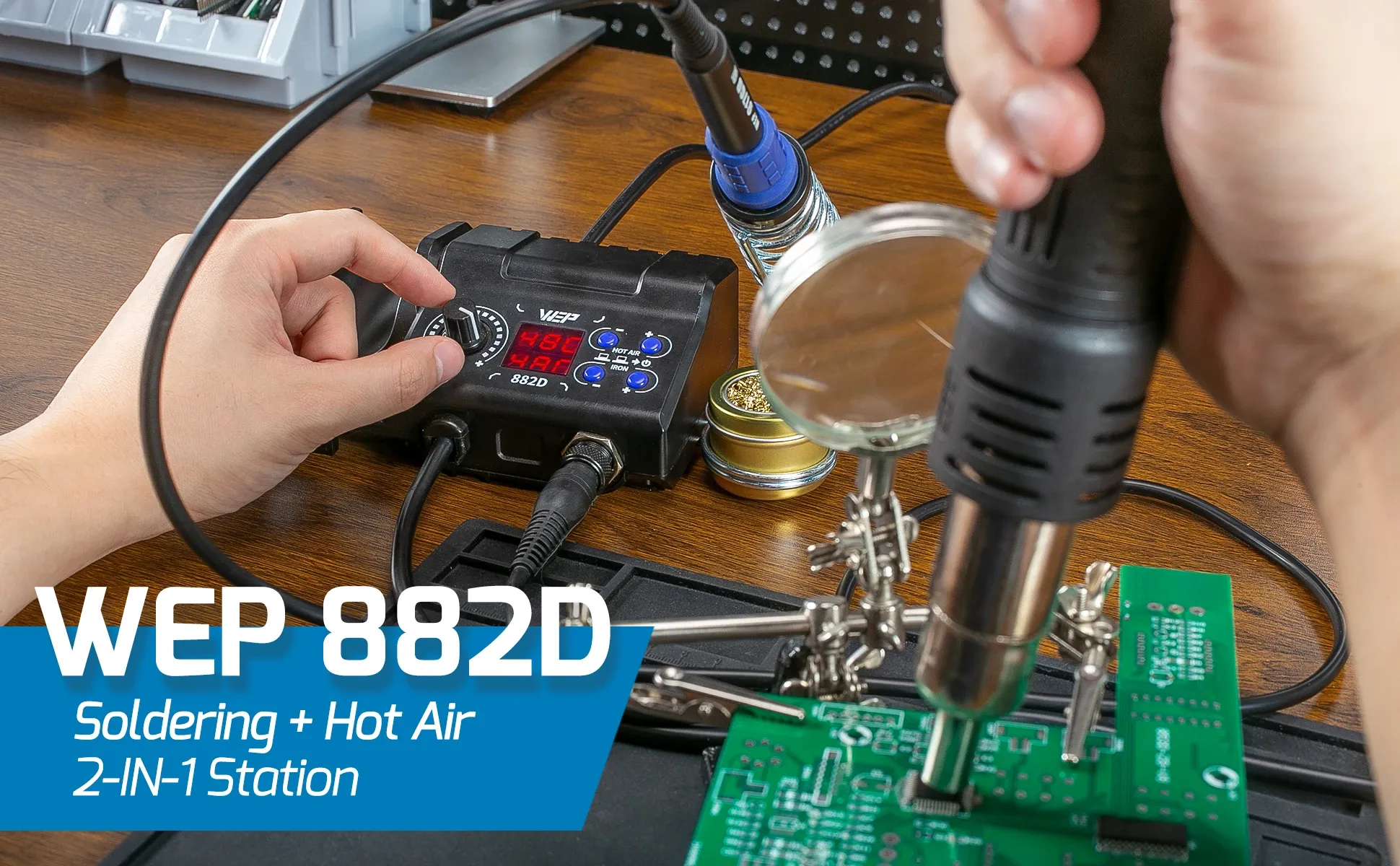
An SMD rework station is a temperature-controlled electronics repair tool used to remove, replace and reflow surface-mount components on a PCB, usually with hot air and often with an integrated soldering iron. For UK users, the best option is typically a reliable 2-in-1 station with stable airflow, accurate temperature control, 230V compatibility and dependable after-sales support.
TL;DR: If you repair modern circuit boards, an SMD rework station makes surface-mount work safer, faster and more repeatable than using improvised heat tools. In most UK workshops, a compact 2-in-1 hot air and soldering station offers the best balance of control, bench space and value.
SolderAir’s core promise is simple: master your electronics repairs with the ultimate soldering station. In practice, that means combining precise PCB soldering and professional SMD rework in one space-saving, UK-ready unit. This guide explains what an SMD rework station does, who needs one, which features matter most for British buyers, and how to avoid expensive buying mistakes.
Key Takeaways
- An SMD rework station is designed for removing and refitting surface-mount components using controlled hot air and, in many cases, an integrated soldering iron.
- For UK buyers, 230V compatibility, BS plug arrangements, safety standards and reliable after-sales support matter as much as raw wattage.
- The best choice is usually a 2-in-1 setup that handles both PCB soldering and hot air work without taking over the bench.
- Airflow stability, temperature accuracy, nozzle availability and ergonomic handpieces have more day-to-day impact than headline power figures alone.
- If you repair consumer electronics, industrial boards or hobby projects regularly, a proper SMD rework station is faster, safer and more consistent than improvised hot air tools.
What is an SMD rework station?
An SMD rework station is a specialist electronics repair tool used to remove, replace and reflow surface-mount devices on printed circuit boards. These devices include resistors, capacitors, diodes, SOIC chips, QFP packages and many other compact components found across modern electronics.
Unlike a basic soldering iron alone, an SMD rework station typically uses a controlled stream of heated air to warm solder joints evenly across multiple pins or pads. As a result, many surface-mount parts can be removed more safely than if you try to heat one joint at a time. A stable hot air source helps the operator lift components cleanly with less risk of lifted pads or scorched board laminate.
Many modern units are sold as 2-in-1 stations that combine hot air rework with a conventional iron. In real workshop use, that layout is practical. For example, you might use hot air to remove a failed regulator IC, then switch to the iron for pad clean-up, jumper work or connector repair without changing machines.
Based on our testing priorities for UK bench work, the most useful stations are not necessarily the ones with the highest quoted power. Instead, they are the ones that deliver predictable heat control, comfortable handling and consistent performance across repeated repairs.
If you want the wider context on these combined systems, read The Ultimate Guide to 2 In 1 Soldering Station in the UK, which explains why integrated stations have become such a practical choice for British users.
Why does an SMD rework station matter for modern electronics repair?
Surface-mount construction dominates modern electronics. Phones, routers, laptops, medical support equipment interfaces, industrial controllers and automotive modules all rely heavily on compact PCB layouts. Therefore, even routine fault-finding increasingly involves components that are too small or too thermally sensitive for crude tools.
In the UK alone, discarded electricals remain a major issue. According to Material Focus, around 155,000 tonnes of small electricals were thrown away in household bins in the UK in 2023 rather than reused or recycled properly. While not every item is economically repairable, better access to suitable repair tools directly supports longer product life and reduced waste.
That matters in commercial settings as well. Workshop teams supporting schools, councils, manufacturers or healthcare-related equipment maintenance often need dependable board-level tools instead of replacing entire assemblies by default. Consequently, an SMD rework station helps reduce unnecessary board scrap where component-level repair is practical and safe.
According to UK guidance around electrical safety and responsible equipment handling, controlled tools are preferable to improvised methods when carrying out bench repairs. In other words, precision matters not just for results but also for safer workshop practice.
Who should buy an SMD rework station?
Do repair technicians need an SMD rework station?
If you regularly replace charging ICs، MOSFETs، controllers or fine-pitch chips on customer devices، this tool sits near the top of the essentials list. Above all، repeatability matters when paid work depends on speed and consistency.
Is an SMD rework station useful for engineers and maintenance teams?
Yes. Many industrial maintenance jobs now involve compact control boards rather than simple through-hole circuitry. Therefore، a proper station makes it easier to carry out component swaps without relying on broad-brush heat methods that can damage nearby parts.
Should serious hobbyists buy an SMD rework station?
If your projects include microcontrollers، breakout boards or salvaged assemblies from consumer equipment، stepping up from a basic iron can save time and frustration. In addition، it reduces the temptation to use unsuitable heat guns designed for general DIY rather than precision electronics work.
Are SMD rework stations suitable for education and training?
Colleges and technical training providers benefit from equipment that reflects actual workshop practice. As a result، learners develop better habits when they use temperature-controlled tools with sensible airflow adjustment instead of improvised methods.
When might you not need an SMD rework station?
If all your work is limited to simple wire joints or large through-hole connectors، an SMD rework station may be more capability than you need right now. In that case، it may be worth starting with broader kit guidance in Electronics Soldering Kit Explained: A UK Buyer’s Guide.
What types of SMD rework station are available in the UK?
What is a hot air only SMD rework station?
These focus purely on heated airflow for component removal and reflow tasks. They can be suitable if you already own an excellent standalone iron and want dedicated hot air capability only.
What is a 2-in-1 soldering and hot air station?
This is often the sweet spot for UK buyers. A combined unit saves bench space while covering most common PCB jobs. Moreover، it keeps power management simpler in smaller workshops or home setups where socket space is limited.
Are advanced digital SMD rework stations worth it?
Some models offer tighter temperature control، preset programmes or sleep functions aimed at heavier use. These are useful where repeat jobs justify extra control، calibration confidence or traceability.
Do you need a BGA-focused rework system?
BGA machines sit beyond what most readers need for ordinary electronics repair benches. They are specialised systems for ball grid array work with far greater complexity and cost. For most component replacement tasks on consumer and light industrial boards، a quality standard SMD rework station is enough.
If your work overlaps heavily with damaged tracks، pads or fault diagnosis on boards generally، you may also find useful crossover advice in Pcb Repair Soldering Station Explained: A UK Buyer’s Guide.
Ready to upgrade your bench with SolderAir?
Shop the Kit — £105.61